
Best Streets in Preserve Oakville: A Micro-Market Investment Guide
April 24, 2026
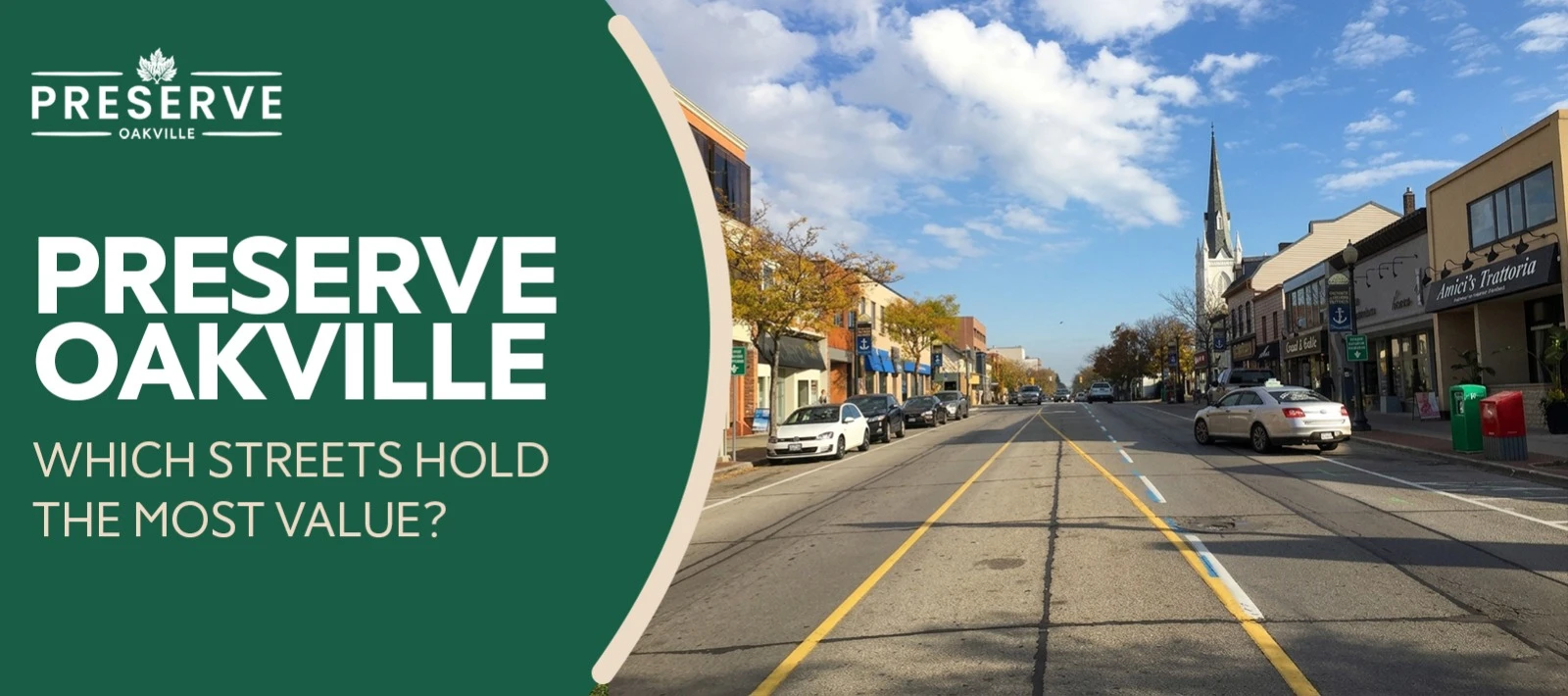
Identifying the best streets in Preserve Oakville is about more than just finding a nice house; it’s about understanding how specific street dynamics influence long-term property value and lifestyle. Looking into preserve oakville homes for sale usually means you’re already past the basic “is Oakville a good market” stage. The focus shifts more toward where inside Preserve actually makes sense to buy. In this community, homes can look quite similar at first glance, but street location plays a noticeable role in their performance in terms of demand, resale speed, and long-term value.
This guide walks through the main streets in Preserve so you can get familiar with how the neighborhood is set up.
How Preserve Oakville Functions as a Real Estate Market
Preserve is part of North Oakville’s newer residential expansion, built in structured phases with detached homes, townhomes, and semi-detached properties. The layout is intentional, which creates consistency in design but variation in how different streets function.
When people search Oakville family homes for sale or browse Preserve Oakville real estate, they’re usually comparing homes that are similar in size, age, and builder type. What separates them is not always obvious from listing photos — it shows up in street dynamics.
Three key layers shape how Preserve behaves:
Connectivity: This is basically the idea of how directly a street links to main roads or loops through the neighbourhood. This affects daily traffic and visibility.
Buyer Concentration: This refers to whether the street is dominated by families, investors, or upsizers. That influences turnover and pricing stability.
Long-Term Absorption: So by this, we mean how quickly similar homes sell when they hit the market. Some streets move quickly, others take longer, but hold value differently.
Understanding these layers makes it easier to interpret why two similar homes can perform differently in resale, even within a few blocks of each other.
Investor-Focused Street Breakdown (Preserve Oakville)
Instead of loosely listing streets, it helps more to group them based on how they actually behave in the market.
Street / Micro-Area | Market Behavior | Buyer Demand Type | Investment Profile |
Preserve Drive corridor | High exposure, steady listing flow | Mixed buyer base | Strong liquidity, moderate appreciation |
Buttonbush Trail cluster | Strong school-linked demand | Family end-users | Low vacancy, long-term hold stability |
Charles Fay Pass area | Interior crescent layout, low traffic | Owner-occupiers | Stable pricing, slower turnover |
George Savage Avenue vicinity | Connector road influence | Balanced mix of buyers | Reliable resale activity |
Forest Edge Trail pockets | Edge adjacency, fewer listings | Family-focused end-users | Higher retention, limited supply |
Wheat Boom Drive edge (Preserve side) | Larger detached homes, upsizer demand | Move-up buyers | Higher price ceiling, slower absorption |
What These Street Patterns Actually Mean
Inside Preserve Oakville, street location plays a key role in demand, resale activity, and long-term property value. Here’s an elaborate look at why these are the best streets in the preserve:
Preserve Drive Corridor
The Preserve Drive corridor is one of the more active parts of the community. It naturally carries more movement because it connects different residential pockets.
Homes here tend to stay visible in the market, which supports steady resale activity. For investors, that visibility usually translates into quicker buyer awareness when listings appear and more consistent showing activity during active cycles.
Buttonbush Trail Area
Buttonbush Trail and the surrounding streets follow a more family-oriented pattern. These pockets are closely tied to school access and everyday residential living.
Homes here tend to stay occupied for longer periods, with fewer turnovers. That creates lower vacancy risk and more predictable demand over time. Even in slower markets, this area tends to hold steady interest from families looking at Oakville family homes for sale.
Charles Fay Pass & Interior Crescents
Charles Fay Pass and similar interior streets operate at a slower, quieter pace. Traffic is limited, and most homes are part of long-term ownership cycles.
These streets don’t typically see rapid turnover, but they do offer stability in pricing over time. That makes them appealing to buyers focused on long-term holding rather than frequent resale activity.
George Savage Avenue & Connector Zones
George Savage Avenue and nearby connector streets sit between high-access and low-traffic areas. These benefit from convenience without feeling overly busy, which keeps demand balanced across different buyer types. This mix is why these streets often appear in searches for Preserve Oakville real estate — they tend to attract both investors and end-users.
Forest Edge Trail Pocket
Forest Edge Trail areas have a lower-density residential feel. Inventory is limited, and homes don’t come up as frequently as other parts of the community.
When listings do appear, they usually attract focused attention due to limited supply. Over time, this constraint tends to support stronger value retention compared to higher-turnover zones.
Wheat Boom Drive Edge (Preserve Side)
On the outer edge near Wheat Boom Drive, homes are typically larger with more spacing and a slightly more open layout.
These properties appeal to move-up buyers who want more space without leaving North Oakville. Sales cycles here can be slower, but pricing ceilings are generally higher due to lot size and home scale.
Why Street Choice Matters More in Preserve Than Many Buyers Expect
In many older neighbourhoods, street differences develop over decades. In Preserve, those differences were essentially built in from the beginning.
That’s why Preserve Oakville homes for sale don’t behave as a single unified market. Instead, they operate as smaller micro-markets with their own demand patterns.
A home on a high-connectivity street can see faster listing activity but slightly more variability in pricing pressure. A similar home on an interior crescent might take longer to sell but hold value more consistently through different market cycles.
For investors, this distinction matters because it affects both exit timing and tenant quality. For end-users, it influences lifestyle and long-term satisfaction.
Demand Behavior Across Preserve Oakville Streets
One of the more consistent patterns in this community is that demand does not spread evenly.
Family-focused streets — especially those near schools and parks — maintain steady interest regardless of broader market cycles. These areas rarely experience deep demand drops because they serve a practical daily function.
Connector streets tend to follow market momentum more closely. When demand is strong, they move quickly. When the market slows, they adjust more visibly.
Interior streets behave differently again. They don’t spike as sharply during hot markets, but they also don’t drop as quickly during slowdowns. That makes them more stable in long-term holding scenarios.
This layered behavior is part of why Preserve Oakville real estate continues to attract both investors and end-users simultaneously.
Where Investors Typically Focus in Preserve Oakville
Investors usually fall into one of two approaches here.
Some prioritize liquidity — they want properties that attract consistent attention and can be resold efficiently. These buyers often lean toward the Preserve Drive and George Savage Avenue areas.
Others prioritize stability — they prefer lower turnover, strong tenant retention, and predictable appreciation. These buyers usually focus on interior crescents like Charles Fay Pass or school-linked streets like Buttonbush Trail.
Detached homes tend to perform best in both categories, which is why they dominate searches for Oakville detached homes for sale in this community.
Townhomes offer a lower entry point but usually come with more turnover, which changes the rental management dynamic slightly.
Final Perspective: How to Approach Buying in Preserve Oakville
Anyone actively looking at Preserve Oakville homes for sale eventually reaches the same realization — the decision isn’t just about the house itself. It’s about where that house sits within a very structured neighbourhood system.
Some streets prioritize movement and accessibility. Others prioritize calm and long-term residential stability. A few balance both in a way that keeps demand consistent across different market cycles.
Greenbelt-adjacent pockets, school-linked streets, central connectors, and edge detached zones all serve different buyer types, but they exist within the same community framework.
The most effective approach is not to search for a “best street” in isolation, but to match the street type with the intended outcome — whether that’s rental stability, long-term appreciation, or end-user living.
In a market like Preserve, that alignment is often what separates average decisions from well-positioned ones.
FAQs
Which streets are best for buying in Preserve Oakville?
Streets around Preserve Drive, Buttonbush Trail, and Charles Fay Pass are commonly preferred due to steady demand and strong residential stability.
Is Preserve Oakville a good area for investment properties?
Yes, it offers stable long-term demand with balanced appreciation, especially in detached home segments.
Where are the quietest streets in Preserve Oakville?
Interior crescent streets such as Charles Fay Pass and nearby loops tend to have the lowest traffic and strongest residential feel.
Do detached homes in Preserve Oakville hold value well?
Detached homes generally perform well due to consistent end-user demand and limited supply in key streets.
Recent Blogs

Elementary Schools in The Preserve Oakville & Homes Nearby
October 13, 2026
Read More
Living in The Preserve Oakville: Commute, GO & Home Values
October 12, 2026
Read More
Pre-Construction vs. Resale Homes in The Preserve
October 9, 2026
Read More
First-Time Home Buyer's Guide to Preserve Oakville
October 8, 2026
Read More