
Living in The Preserve Oakville: Commute, GO & Home Values
October 12, 2026
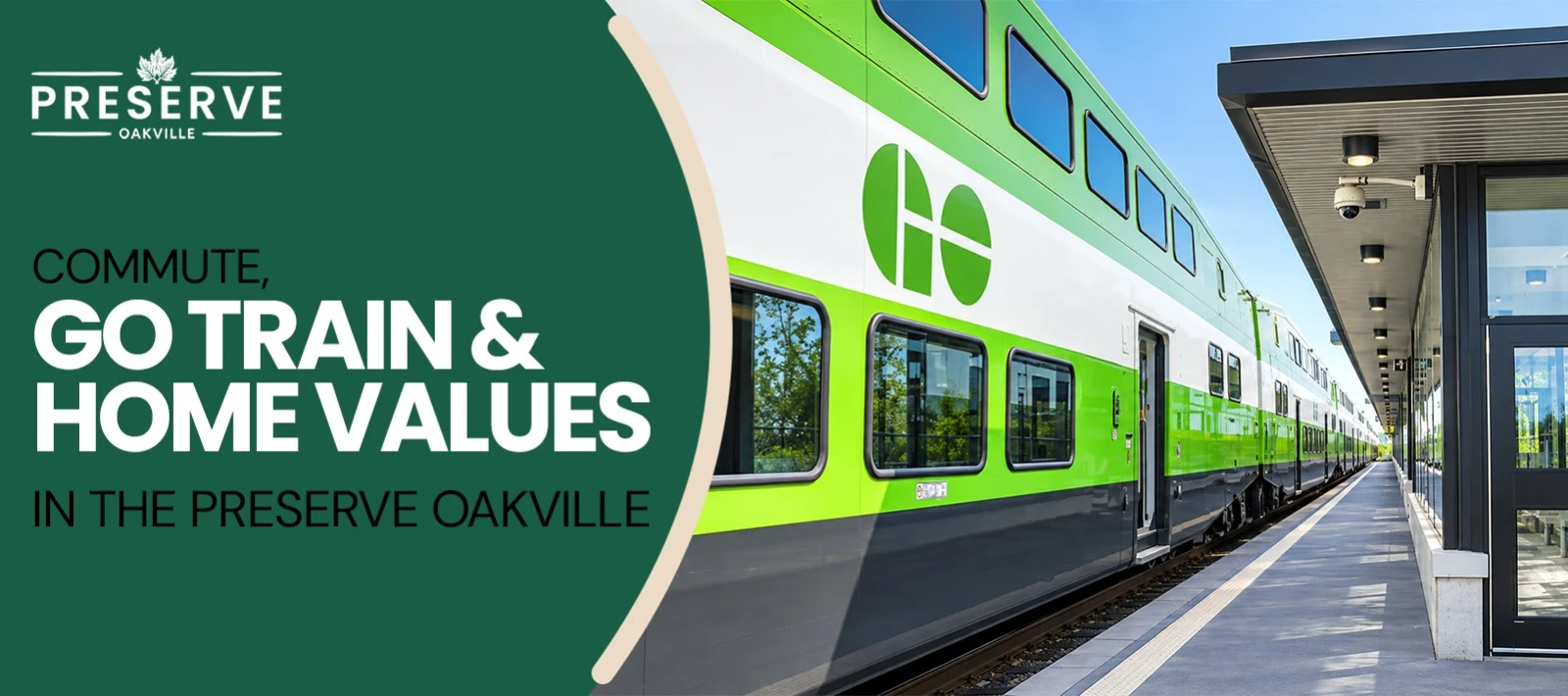
Ask a buyer why they're looking at The Preserve in North Oakville, and a few answers come up again and again: the newer homes, the schools, the parks. Almost every conversation also touches on one more thing: how long will it take me to get to work?
That question matters beyond daily comfort. In the Greater Toronto Area, commute convenience is one of the strongest forces behind what buyers want and what they are willing to pay. This guide explains how commuting from The Preserve really works, and how it connects to home values.
What Is The Preserve?
The Preserve is a master-planned community in North Oakville, north of Dundas Street West and close to the Uptown Core. It was built under the Town of Oakville's North Oakville planning framework, which is why it feels different from the older, established parts of town. Streets are planned, parks and schools are built into the layout, and the housing mix is wide: low-rise condos, stacked and rear-lane townhomes, freehold townhomes, semi-detached homes, and detached homes.
Explore homes for sale in Uptown Core to see the available properties in this nearby community and compare your options when considering a move to The Preserve.
Commuting by Car
For drivers, The Preserve has a real advantage: Highway 407 ETR is close by. If your work is east or west of Oakville, such as Mississauga, Brampton, Milton or Burlington, you can get on the highway quickly and skip much of the local traffic.
Heading south, residents typically use Neyagawa Boulevard, Trafalgar Road or Sixth Line to reach the QEW and Highway 403. Dundas Street West is the main east-west road for everyday trips.
A few practical points:
Toronto is the toughest drive. Outside rush hour, a trip downtown can be manageable. At peak times, the QEW and Gardiner Expressway are famously unpredictable, and travel times can double.
Mississauga and Pearson-area jobs are generally much easier by car than by transit.
Burlington, Milton and Hamilton are usually straightforward, especially because many of these trips go against the heaviest commuter flow.
Highway 407 ETR is a toll route. Charges depend on distance, time of day and vehicle type. If you plan to use it regularly, review the current rate schedule on the 407 ETR website and compare it against your time savings.
Traffic is never constant. Construction, weather and collisions change drive times from day to day, so treat any estimate as a range, not a promise.
Commuting by GO Train
Because The Preserve is north of Dundas, it is not within walking distance of the rail line. Most commuters heading to Toronto drive or take a bus to Oakville GO Station on the Lakeshore West line, which runs between Toronto's Union Station and the Hamilton area.
This means a GO commute from The Preserve has two parts:
The first leg: a drive or bus ride from home to the station. By car, this is typically about 12 to 15 minutes off-peak, and it can take longer during weekday rush hour or school-run traffic. By bus, it takes noticeably longer.
The train ride: the trip into Union Station. Express trains take roughly 30 to 35 minutes from Oakville GO, while all-stops trains take around 44 to 45 minutes.
Metrolinx has been expanding Lakeshore West service as part of its GO Expansion program, aiming for more frequent, all-day, two-way trains. Train times vary by trip, so the best source for current schedules, fares and parking details is always the official GO Transit website or app (Source: Metrolinx / GO Transit).
What to know about driving to the station:
Parking at GO stations is popular, and free spaces tend to fill up early on weekdays.
Metrolinx offers reserved parking at some stations for a fee, which can be worth considering if you commute daily.
Always do a trial run before you buy (see the checklist below).
Commuting by Bus
Oakville Transit connects the community with the Uptown Core and other parts of town. Many residents connect from local routes to routes that serve Oakville GO or the wider network, and Oakville Transit also offers on-demand services in some areas.
Bus service works well for some trips, but it usually takes longer than driving, and evening and Sunday schedules can be less frequent. Check current routes and timetables on the Oakville Transit website before relying on it.
Car vs. GO Train: Which Makes Sense?
There is no single right answer. The better option depends on where you work, how flexible your schedule is, and what you are willing to spend in time and money. Here is a side-by-side look at how the two compare for a typical commuter in The Preserve.
Factor | Car | GO Train |
|---|---|---|
Best for | Mississauga, Burlington, Milton, Pearson-area jobs, flexible schedules | Downtown Toronto and Union Station-area jobs, via Oakville GO on the Lakeshore West line (Hamilton to Union Station) |
Biggest plus | Door-to-door convenience and fast access to Highway 407 | More predictable arrival times, and time to read or work |
Biggest minus | Heavy QEW/Gardiner congestion at peak times; possible 407 tolls | You still need to get to the station first; parking can fill early |
Cost to compare | Fuel, tolls, wear and tear, downtown parking | Fares, station parking, local transit connections |
Hybrid workers often mix both: GO on heavy office days, the car when a trip involves other stops.
How Commute Access Affects Home Values
Here is the real estate side. Buyers in the GTA consistently rank commute convenience near the top of their wish list. That affects demand in a few ways:
Transit access supports demand. Homes with reasonable access to GO service tend to attract a wider pool of buyers, especially professionals who work in Toronto. Regional research from TRREB, CMHC and Metrolinx is a good place to follow this (for example, the TRREB Market Watch report and the CMHC Housing Market Outlook).
Highway access matters too. For buyers who work in Mississauga, Brampton, Milton or Burlington, quick access to Highway 407 can be just as valuable as a train station.
A dual-commute location is flexible. The Preserve offers both highway access and a path to GO, which appeals to households where two people work in different places.
The commute is one factor among many. Schools, home type, lot size, finishes and market conditions all shape what a home sells for. A short commute helps, but it does not guarantee price growth.
Schools matter a lot in North Oakville. The Preserve is currently linked to White Oaks Secondary School, known for its International Baccalaureate (IB) program, and school access is one of the biggest drivers of family demand in the area. Note that the Halton District School Board is reviewing boundaries, including a new Oakville high school planned for the coming years, so confirm the current school for any address with the HDSB school locator before you buy. For more on local schools and how they relate to the market, see our guide to the best schools in The Preserve Oakville.
Prices and market conditions change often. For current figures, check the latest TRREB Market Watch report (Source: Toronto Regional Real Estate Board) or CREA statistics, along with our Preserve Oakville real estate market report, and compare the same home type and time period.
Which Home Types Suit Commuters?
Condos and stacked townhomes are common entry points for first-time buyers who want lower upkeep. In an Ontario condo, you own your unit, and the condominium corporation manages shared areas, funded by monthly fees (our townhomes vs. condos guide compares the two in more detail).
Freehold townhomes offer more space and a more traditional home feel. Some are built on a POTL (Parcel of Tied Land). With a POTL, you own your home and lot outright (freehold), and the lot is "tied" to a share of common elements, such as a private laneway or visitor parking. In return you pay a monthly POTL (common element) fee that covers maintenance of those shared spaces, such as lane snow clearing.
Detached homes suit growing or multi-generational families who want more space.
Parking is a real consideration. If your household has two commuters, a garage and driveway can make daily life much easier. The Town of Oakville does not allow permanent on-street parking: street parking is limited to three hours, and north of Dundas Street, which includes The Preserve, it is not allowed between 2 a.m. and 6 a.m. at any time of year (south of Dundas, that overnight ban applies from November 15 to April 15). That makes a garage or a driveway with space for two cars a real selling point for commuter households (Source: Town of Oakville On-street Parking rules). Always confirm the latest rules with the Town, since by-laws can change.
A Commuter's Checklist Before You Buy
Don't rely only on a map app. Test the commute yourself:
Drive it at rush hour. Try the route to your workplace, or to the GO station, on a weekday morning.
Check station parking. Visit the GO lot at a typical commuting hour to see how full it is.
Try the bus. If you plan to use transit, ride the route once.
Add up the true cost. Include fuel, tolls, GO fares, parking and the value of your time.
Factor in winter. Snow and ice can noticeably change travel times.
Think about school-time traffic. Streets near schools get busy at drop-off and pick-up.
Ask about construction. Growing communities often have ongoing building nearby.
What's Next for the Area?
North Oakville continues to grow, and regional planning documents from the Town of Oakville, Halton Region and Metrolinx describe ongoing investment in roads, transit and community facilities. More growth can mean more amenities and better connections, but also busier roads. When you evaluate a home, look at both sides, and check current planning information rather than relying on old projections.
Final Thoughts
The Preserve offers a rare mix: a modern, family-friendly community with highway access close by and a rail connection within reach. Whether that suits you depends on where you work and how you like to travel. Test your own route, compare real costs, and look at current market data before you decide.
If you are considering a move to The Preserve, take time to explore the neighbourhood, compare available homes, and consider what matters most to your household. Understanding the local housing options and nearby amenities can help you make a more informed decision.
FAQs
Is The Preserve a good place to live for Toronto commuters?
It can be, especially if you are comfortable with a two-part commute: a short drive or bus ride to Oakville GO, then the train to Union Station. If you drive to Toronto during peak hours, expect heavy traffic.
How far is The Preserve from the Oakville GO Station?
It is typically about 12 to 15 minutes by car in off-peak conditions, and it can take longer at peak times. By bus, it takes noticeably longer. Check Google Maps or the Oakville Transit trip planner for current times.
Is it better to drive or take the GO train to downtown Toronto?
For most commuters heading to downtown Toronto, the train is more predictable at peak hours, while driving is usually easier for destinations in Mississauga, Burlington or Milton.
Is Highway 407 worth the toll?
It depends on your route, schedule and how much time it saves you. Check the current 407 ETR rate schedule and compare it with your alternative route.
Does GO parking fill up early?
Popular GO lots often fill up on weekday mornings. Visit at your usual commuting time before you buy, and consider reserved parking if you need a guaranteed spot.
Does commute access affect home values in Oakville?
Yes, it is one of several factors. Proximity to GO service and highways tends to support buyer demand, alongside schools, home type and market conditions.
What types of homes are available in The Preserve?
You will find condos, stacked townhomes, freehold townhomes, semi-detached homes and detached homes.
How long is the GO train ride from Oakville to Union Station?
Express trains take roughly 30 to 35 minutes, and all-stops trains take around 44 to 45 minutes. Check the GO Transit schedule for your exact trip.
Can I park on the street overnight in The Preserve?
No. North of Dundas Street, overnight on-street parking (2 a.m. to 6 a.m.) is not allowed at any time of year, so plan for a garage or driveway (Source: Town of Oakville).
Is The Preserve walkable, or do I need a car?
Inside the community, parks, trails and schools are easy to reach on foot, but most weekly errands and commuting still work best with a car.
Recent Blogs

Elementary Schools in The Preserve Oakville & Homes Nearby
October 13, 2026
Read More

Pre-Construction vs. Resale Homes in The Preserve
October 9, 2026
Read More
First-Time Home Buyer's Guide to Preserve Oakville
October 8, 2026
Read More
Property Transfer & Closing Costs in Oakville: Buyers Guide
October 7, 2026
Read More